KEVIN CAPON
Kevin Capon's photographs have an "uncanny quality, a subtle and disturbing strangeness that seems inexplicable"
John Hurrell, writer/editor for EyeContact website, Aotearoa New Zealand.
Mokau, North Taranaki, Aotearoa New Zealand. Email: capon@capon.co.nz

The Hierophant
C-Type Chromogenic Print, 800 x 1000mm
Edition of 8

Preacher 2015
Pigment Ink on Hahnemuhle photo-rag, 255 x 304mm
Edition of 12

Boy with a dart
C-Type Chromogenic Print, 178 x 178mm
Edition of 12

Persil
Pigment Ink on Hahnemuhle Photo-rag

.Corran, 1988-89
C-Type Chromogenic Print , 178 x 127mm
Edition of 25
Sydney Contemporary
Australasia's international art fair
10 - 13 September, 2015

Vein 2014, Digital Chromogenic Print, 560 x 850mm, Edition of 8


Clive 1983, Gelatin Silver Print, 393 x 500mm, edition of 6
A number of my photographs including 'Clive' and 'Vena amoris' will be on show at the Sydney Contemporary, Australasia's international art fair 10 - 13 September 2015.
Australia's largest and most diverse gathering of Australian and international galleries, housed at the Carriageworks, Sydney's contemporary arts precinct, the art fair presents over 90 galleries from 13 countries, offering visitors access to some of the worlds most respected artists as well as the opportunity to see the next generation of emerging artists.
Sanderson Contemporary Art stand CO5
http://sydneycontemporary.com.au/?gclid=COaz9obs2ccCFdnvQodwP8Olw
The drinking bird, 2015
(Video still)
HD video and sound transfer
Real-time continuous loop


Untitled, 2015
Digital Chromogenic Print, 560 x 860mm
Edition of 8
Hangi Pit, Taranaki
C-Type Chromogenic print, 1200 x 1500mm
Edition of 8

Right now my roof needs painting

Monica
Pingyao International Photo Festival, China
A selection of images from History in the taking: 40 Years of PhotoForum
19 - 25 September 2015
Dunedin Public Art Gallery
History in the taking: 40 Years of PhotoForum
22 August 2015 - 15 November 2015
City Gallery Wellington
History in the taking: 40 Years of PhotoForum
14 March - 14 June 2015
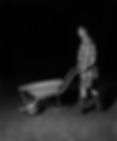
Me with my new wheel barrow, Mokau 1998
Unique gelatin silver print, 500 x 600mm
Edition of 12


Portrait of two bricks
Digital Chromogenic print, 500 x 600mm
Edition of 12
Tom Capon 11/11/1930 - 24/12/2014
My father has just died so I will need to be quiet for a bit.


Shark 2014
Digital Chromogenic Print, 500 x 600mm
Edition of 12

Tubeless radial steel tyre, 2014
C-Type Chromogenic print, 1200 x 1500mm
Edition of 8

The fly, 2014
Digital Chromogenic print, 304 x 252mm
Edition of 12

elf portrait with a severe allergic reaction
C-Type Chromogenic print, 244 x 282mm
Edition of 8
Melbourne Art Fair
13 to 17 August 2014

Jihad 2013, Chromogenic print, 500 x 600mm, Edition of 8
Some of my photographs including 'Jihad' will be on show at the Melbourne Art Fair 13 to 17 August 2014.
The Melbourne Art Fair will present 70 leading Australian and International Galleries who will present over 300 artists working across a range of media including painting, sculpture, photography, video and installation.
The 2014 exhibitor list contains some of the most respected names in contemporary art making in the cities visual arts calendar.
http://melbourneartfair.com.au/art-fair/visitors/exhibitors/
PHOTOFORUM AT 40,
.Counterculture, Clusters, and Debate in New Zealand

Rim Books is pleased to announce the forthcoming release of PhotoForum at 40: Counterculture, Clusters, and Debate in New Zealand by Nina Seja. In this richly illustrated publication, art historian Nina Seja gives an illuminating account of the communities, relationships, and events that have shaped PhotoForum’s first forty years, and charts the development of photographic art in New Zealand during this time.
PhotoForum Inc. is a not-for-profit Society dedicated to the promotion of photography as a means of communication and expression. Acting as an intellectual and creative meeting place for New Zealand’s photographic community since its inception in 1973, PhotoForum has published, exhibited, and promoted an impressive list of New Zealand photographers.
PhotoForum at 40 brings together some of its most significant portfolios, critical thinking, and debates about photography to date, drawn from the PhotoForum archives as well as from dynamic personal correspondence between the photographers and editors. It includes new interviews and conversations with some of the key players who have shaped PhotoForum’s history. From the formative portfolios of Anne Noble, Peter Peryer, and Murray Cammick to the written reflections and conversations of Bruce Connew, Rhondda Bosworth, and Glenn Busch with Tim J. Veling, and others, PhotoForum at 40 delves into the past, present, and future of photography in New Zealand. In contributing essays, co-founder of PhotoForum John B. Turner offers a personal recollection of the Society’s early days, and Athol McCredie, Curator of Photography at the Museum of New Zealand Te Papa Tongarewa, provides a brief history of PhotoForum’s sister organisation, PhotoForum/Wellington. The volume concludes with a chronology mapping the development of photographic art in New Zealand over more than half a century.
RIM BOOKS
ISBN 978-0-473-28325-4
June 2014
300p, 167 plates with additional illustrations, 290 x 245 mmSoftcover
RRP NZ $65 inc.GST
For all orders and requests info@rimbooks.com
Auckland Festival of Photography - solo exhibition
'A Perfect Day'
Sanderson Contemporary Art Gallery Auckland, 3 -15 June 2014


Sanderson Contemporary Art - Newmarket
Osborne Lane, 2 Kent St, Auckland, NZ+64 9 520 0501
Sanderson Newmarket is open 7 days:
Monday – Friday 10am – 6pmSaturday – Sunday 10am – 4pm
National Institute of Creative Arts and Industries
History in the Taking: 40 years of PhotoForum
The Gus Fisher Gallery, Auckland
6 - 28 June 2014

Installation View, 'Me with my new wheel barrow at our Mokau property 1998, Gelatin silver print, 500 x 600mm
Contact info: gusfishergallery@auckland.ac.nz
Website: http://www.gusfishergallery.auckland.ac.nz
Opening Event
Friday 6 June 2014 at 5.30pm with speaker Rob Garrett, art consultant and early PhotoForum exhibitor
Founded on 12 December 1973 as an incorporated society to promote and sponsor the use of photography as a means of communication and expression, PhotoForum is best known through the eponymous magazine which was first published in February 1974. Membership peaked at 250 in the 1980s, and now numbers around 150 photographers. Founding editor and PhotoForum director John Turner lives in China, and is still involved in the publications issued under the organisation’s imprint.
Special Events
1pm, Saturday 7 June
Sister Speak: Ane Tonga in conversation with her sister Nina Tonga, Curator of Pacific Cultures, Museum of New Zealand Te Papa Tongarewa, in the exhibition Grills.
2pm, Saturday 7 June
The history of the Wellington branch of PhotoForum is outlined by Mary Macpherson, with a guided tour of her exhibition Bent.
1pm, Saturday 14 June
PhotoForum member Haru Sameshima and Director Geoffrey Short discuss the history of the organisation with Ron Brownson, Senior Curator (New Zealand and Pacific) Auckland Art Gallery and author of the book PhotoForum at 40: Counterculture, Clusters and Debate in New Zealand, Nina Seja
1pm, Saturday 21 June
Athol McCredie, Photography Curator, Museum of New Zealand Te Papa Tongarewa, will discuss the collection of photographs on display in Gallery One for the exhibition History in the Taking: 40 Years of PhotoForum.
1pm, Saturday 28 June
PhotoForum member Rhondda Bosworth discusses her photographic work in the exhibition.
2pm, Saturday 28 June
Launch of the book PhotoForum at 40 Counterculture, Clusters and Debate in New Zealand commissioned by PhotoForum Director Geoffrey H. Short and Jan Young on behalf of PhotoForum Incorporated and written by photographic historian Nina Seja.
Gus Fisher Gallery Public Programme
Contact info: gusfishergallery@auckland.ac.nz

The archer, 2014
C-Type Chromogenic print, 1000 x 1200mm
Edition of 8

A perfect day, 2014
C-Type Chromogenic print, 1060 x 1270mm
Edition of 8

Cross section of an innerspring mattress, 2014
C-Type Chromogenic print, 1200 x 1500mm
Edition of 8

Portrait of a young woman
Pigment Ink on Hahnemuhle photo-rag, 305 x 460mm
Edition of 12
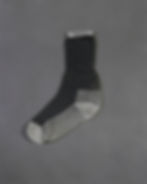
The dead mans sock, 2013
C-Type Chromogenic print, 1200 x 1500mm
Edition of 8

Compression of the common femoral artery, 2013
(From an illustration Compression of the common femoral artery)
Digital Chromogenic print, 560 x 850mm
Edition of 8

Taranaki
C-Type Chromogenic print, 1200 x 1750mm
Edition of 8

Narcissus, 2013
Pigment Ink on Hahnemuhle photo-rag, 400 x 500mm,
Edition of 8
Auckland Art Fair
7 - 11 August, 2013

Nose Bleed 2011, Digital Chromogenic print, 560 x 850mm, Edition of 8
Some of my photographs including 'Nose Bleed' will be on show at the Auckland Art Fair 7 - 11 August 2013. Located at The Cloud, Queens Wharf, 99 Quay Street, Auckland just across the road from Britomart Transport Centre and adjacent to the Auckland Ferry terminal.
Auckland Art Fair, New Zealand's international showcase for contemporary art presents exhibitions by a select contingent of New Zealand and Australia's leading galleries and the opportunity to view and purchase works by the region's most sought-after artists.
Over 4 days the biannual fair attracts 10,000 discerning visitors to Auckland from points all over New Zealand, Australia and the Pacific Rim. Event highlights include a gala Vernissage for 900 guests and keynote lecture by one the world's leading art commentators.

Stem Graft
Pigment Ink on Hahnemuhle photo-rag, 560 x 850mm
Edition of 8

Hair Clip, 2013
Gelatin Silver Print from a found negative, 83 x 60mm,
Edition of 50
Auckland Festival of Photography
30 May - 21 June 2013

The Aquarium 2010, 230 x 360mm, Digital Chromogenic print, Edition of 10
Four of my photographs are being shown during the Auckland Festival of Photography a city-wide contemporary art and cultural event which takes place within Auckland's major galleries, project spaces, non-gallery venues and public sites during June each year. The programme includes a mix of emerging and established artists and comprises existing works and creation of new work.
The exhibition is called Down Home and focuses on narratives of home environments, presenting familial interactions, household artefacts, the domestic and the suburban; the selected artists demonstrate how close studies of 'the everyday' can lead to quiet revelations. Featuring Kevin Capon, Young Sun Han, PJ Paterson and Jane Zusters. For further information contact Sanderson Contemporary Art-Herne Bay Gallery 122 Jervois Rd, Auckland, NZ, +64 9 378 9298

The Carillon
Pigment Ink on Hahnemuhle photo-rag, 1200 x 1800mm
Edition of 8

Supervitrified Dinnerware,
C-Type Chromogenic print, 624 x 830mm,
Edition of 8
Jaw Harp 2013
6o second extract from a continuous play video loop by Kevin capon

Deadlock 2012
C-Type Chromogenic print, 1200 x 1500mm
Edition of 8
.
.
Backstitch 2012
Pigment Ink on Hahnemuhle photo-rag, 474 x 603mm
Edition of 8

Anonymous 2011
Pigment Ink on Hahnemuhle photo-rag, 760 x 1240mm
Edition of 8

The flute player 2012
C-Type Chromogenic print, 1200 x 1500mm
Edition of 8
Auckland Art Week
Artist talk by Kevin Capon
26 October 2012

Art Week Auckland has been developed by the NZ Contemporary Art Trust, the charitable body behind the highly successful Auckland Art Fair. The aim of the event is to grow Auckland’s visual arts audience through discovery and discussion.Kevin Capon will be giving an on-site artist talk accompanying his new series of work currently on show at Sanderson Contemporary Art, Herne Bay Gallery.
http://artweekauckland.co.nz/events/artist-talk-kevin-capon-anonymous
Everyday Irregular
Sarjeant Gallery, Whanganui
17 September - 4 December 2011

The McGimpsey Sheffield knife by Kevin Capon, Digital Chromogenic print.
Bill Culbert, Jude Rae, Kevin Capon, Glenn Burrell, Roberta Thornley, Margaret Silverwood, Jill Kennedy, Rob Cherry.
everyday of or happening every day, daily; common, usual; appropriate or pertaining to weekdays, not Sunday...
irregular not regular; not conforming to rule or to the ordinary rules; disorderly; uneven; unsymmetrical; variable...
EVERYDAY IRREGULAR brings together the work of eight artists whose work muses on the everyday, be that through their choice of object or subject to draw, photograph, paint or animate, or through sculpture to literally reconfigure an everyday object into something remarkable. These artists encourage us to consider the ‘things’ in the world that surround us, that often we pass by, throw away or resent. In saying this, they are not paying homage to the objects they depict and use to make art but pressing us to consider the massive amount of things required for daily existence and order in our lives; of how numb we are to stillness and to really looking at the detail of our immediate surroundings and that sometimes the most ordinary of objects can actually be, in a particular light, quietly beautiful. If anything, the work featured in this exhibition is testament to the amazing ability of an image or an object to literally stop you in your tracks and allow you to view the world momentarily through someone else’s eyes. Our own everyday becomes irregular.
Kevin Capon’s photographs elevate everyday objects and events to the realm of quietly heroic, at the same time charging them with a simmering suburban tension.
The more time you spend staring at the photographs of Kevin Capon, the more you begin to register that these seemingly ordinary images are charged through with a double dose of anxiety and amplification. The choice of objects is not merely happenstance and the more time you spend with these works, the more they become intense psychological metaphors for history, mortality, hope and oblivion. Capon describes his method of research as largely intuitive, often not knowing the meaning of an image until long after its execution. ‘Deadpan’ is a word that has come up often in the description of Capon’s work and he puts this down to his upbringing in the upper middle-class suburb of the aptly named Mount Pleasant in Christchurch.
The McGimpsey, Sheffield knife depicts a knife that belonged to Capon’s aunt and uncle who lived a simple humble life in Northland. Capon notes “the work honours them and my working class ancestors by elevating this ordinary bone handle knife to a equivalent museum artefact”. The poignancy of this work is in it’s ability also to make us consider the miasma of ‘stuff’ that makes up our daily life and that these ‘things’, often have a much longer life expectancy than us.
Handshake with an alien depicts the artist with a woman from Whakatane who was of the understanding that she had been brought to earth by an alien life form, and could recall the planet from which she came from. Capon notes in correspondence with the curator “I went to her house with the intention of making this unremarkable photograph of myself with an extraordinary person in a quiet suburban street. However, like much of my work ordinary things seem to exude some form of terror, and in my view, this street is no exception.”
Kevin Capon has 9 photographs included in this exhibition.
Greg Donson, Curator/Public Programmes Manager

Everyday Irregular-Curator’s talk
Sarjeant Gallery, Whanganui 25 September 2011
Curator Greg Donson will be giving a floor talk in conversation with some of the participating artists around the group exhibition Everyday Irregular . The show features eight artists working in the domain of the everyday, either through their choice of subject matter or materials. Included are paintings by Jude Rae and Glenn Burrell; photography by Kevin Capon and Roberta Thornley; drawings by Margaret Silverwood, sculptural work byRob Cherry and Bill Culbert and video by Jill Kennedy.
Anonymous
Sanderson Contemporary Art Auckland
3 - 27 October 2012

Auckland Art Fair
4 - 7 August 2011

Doll 2011, C-Type Chromogenic print-Type Digital Print, 1200 x 1500mm
Auckland Art Fair is New Zealand's premier visual arts event, offering a snapshot of what's current in contemporary Trans-Tasman art practice . Presenting a select contingent of New Zealand and Australia's leading galleries, the biennial fair gives you the opportunity to view (and purchase) works by the region's most sought after artists.
Visit the web page http://www.artfair.co.nz/artists.htm for more information.
White Night
Auckland Arts Festival 12 March 2011


After Mere Kururangi. 2 views of the 28 image transition from dark to light over a 60 second continuous time frame.
White Night-Media Release.
On Saturday 12th March 2011 Parnell Road will be occupied by 10 street-based art projects - with all works viewable for one night only. Parnell INK will present performance, interactive and site-specific installations from emerging and established artists as part of Auckland’s inaugural White Night event.
White Night Auckland, part of the Auckland Arts Festival, was inspired by the popular Parisian Nuit Blanche festival, which has been replicated in the world's cultural capitals, including Amsterdam, Madrid, Brussels, Rome and Lisbon.
Amongst the most ambitious events will be the highly-visible, 7 metre tall image projection After Mere Kururangi from artist / photographer Kevin Capon. The work takes its form from an ancient Maori meditation in Poi, projected to monumental size on the side of a building. Like a ghost it appears only for the duration of White Night and disappears at sunrise the next day. This site-specific installation makes reference to the Ministry of Education’s initiative in the 1950’s to employ Maori artists on the board of advisors, thus making Maori art part of the national curriculum in New Zealand, it acknowledges the Ministry’s vision, while criticizing the NZ Government for failing to do the same in legislating dedicated Maori seats on the Auckland City Council.
Visit the web page www.parnell.net.nz/whitenight for more information, updates and a full location guide.
Found: Documenting person, place and object in contemporary photography
Caryline Boreham, Kevin Capon, Paul Hartigan and Jane Zusters
Sanderson Contemporary Art 01 March - 13 March 2011

stack of unopened newspapers 1991 / 2008, C-Type Chromogenic print-Type Digital Print, 1010 x 1350mm
Contemporary photography has found itself increasingly concerned with the meaning of reality and representation, and photography's position within an art historical context that has seen a shift away from inert image-recording towards conscious, stylised image-making.
Throughout the Twentieth century, documentary and object-based photography have remained staples of contemporary practice. Photographs of real subjects strive to create an effect of authenticity that replaces or reshapes the authentic thing; the image and the aesthetic overlay reality itself. The artist's choice in selecting what to photograph and how to record it is ultimately the choice between different versions of reality.
This idea is borne out in Kevin Capon's photography. Familiar objects, locations and found photographs are recontextualised, erasing their understood significance and creating a semantic void. Capon abstracts his subjects formally, often centring his chosen objects against a flat, monochromatic background, strongly enforcing a critical focus on the aesthetic character of the object. Speculative possibilities are rejected in favour of a more restricted focus on the formal potential of photography and the conceptual premise of the object.
Caryline Boreham's interior photographs share this referential function, with familiar settings used to index inscribed cultural information. Recognizable settings are subjected to a critical gaze which encourages viewers to reject the comfortable familiarity of the location and to focus on the cultural and social laws that govern our perception of the space. In this way, Boreham records more than the spatial and geometric properties of her subjects, also indexing an absent truth. This semiotic function is central to contemporary art practice.
Paul Hartigan's work demonstrates an interest in the formal qualities of photography. The accomplished painter and printmaker employs a system of abstraction and photo-manipulation to challenge the expected meaning of his selected objects, recasting them in a style that is strongly influenced by Pop Art and the advertising photography from which it developed. The objects in Hartigan's work are often trivial things--cheap, plastic throwaways--made to act as bearers of meaning by artistic selection. As such, cultural significance and ideological implications are brought to the fore, and the works come to offer a new view of the familiar world.
Running against this tradition is the work of Jane Zusters, whose recent photographs of the aftermath of the Canterbury earthquakes deal directly with literal images and the recording of human experience. Zusters' work is closely aligned with the photojournalistic tradition, however by placing the work in the context of fine art, the viewer is encouraged to universalise the scenes of destruction and desolation to find a common human element in the work. The photographs themselves are not mere indexes, but rather they embody an autonomous mediation between the physical world and the transcendental world of human experience. These documentary photographs, then, become an involuntary record of the human condition in the face of adversity.
The diversity of these art practices is characteristic of contemporary photography, a genre that has become as fluid and persistent as the advance of the technology that enables it. The uniqueness of vision and talent of these photographers is evidence of the validity of photography in contemporary art and the untapped potential of photography as a means of artistic expression.
Saint Kilda,
City Art Rooms
2 - 31 March 2010

Academic 2009, C-Type Chromogenic print, 800 x 1064mm
Kevin Capon, presents a new photographic series to open the 2010 exhibition programme at City Art Rooms.
The exhibition, Saint Kilda, references the remotest part of the British Isles and the suburb of Dunedin where the artist experienced the bleakest time of his life. Reflecting upon his past hardships and the ever present challenges, the nine photographs present visual metaphors of life and death.
Although Capon’s works are psychologically charged and often autobiographical, the camera lens is usually pointed at other objects and living things detached from his personal life. Goldfish frozen in an aquarium where the edges of the tank are not visible, for example, speaks about the condition of isolation and vulnerability in an unsettling environment.
As the artist puts it, “there is this strange and brittle stillness that I look for in a work, that point of recognition between life and death.”
Rather than working in a narrative sequence like a film storyboard, each photograph starts out as a concept that evolves independently from the other images. The series therefore defies cohesive style and the overall effect locates each subject’s fragility and emphasises the suspension of time and space.
Capon uses mundane and familiar icons to explore issues of survival and collapse: a vintage super-vitrified dinner set serves as a portrait of a family now isolated and alone; the distant and blurring lights of Saint Kilda takes the perspective of someone going in and out of consciousness; a still lagoon on an overcast day de-romanticises the landscape, referring to the death of pictorialism in photography. Each image becomes an introspective icon to experience ideas and emotions in a non-linear direction.
Summer Drunk Tank Pink
City Art Rooms, 01 Dec - 30 Jan 2010

After the murder of Amber Lundy
Gelatin Silver Print 283mm x 355mm
Christian Keinstar, Clinton Phillips, Geoffrey Heath, Jason Lingard, Kevin Capon, John Hurrell, Matt Molloy, Simon Glaister, Slava Mogutin
City Art Rooms presents an exploration of one of colour's most interesting effects on humans. The gallery walls will be awash in Baker-Miller Pink - also known as 'drunk tank pink.' The hue resembles a deep Pepto-Bismol, and has been found to lower heart rate, pulse, and respiration levels.
Jail cells painted drunk tank pink have been used as a calming effect on detainees. Dr. Alexander Schauss, director of the American Institute for Biosocial Research in Tacoma Washington, was the first to report the suppression of angry, antagonistic, and anxiety ridden behavior among prisoners: “Even if a person tries to be angry or aggressive in the presence of pink, he can't. The heart muscles can’t race fast enough. It’s a tranquilizing colour that saps your energy.” In spite of these powerful effects, however, evidence shows that tranquility may only be short-term. Once the body returns to a state of equilibrium, a prisoner may regress to an even more agitated state.
Playing on the idea of the drunk tank – various male artists will exhibit new and existing works that present confrontational attitudes and motifs. In addition to our roster of New Zealand artists, we are excited to feature early works by rising German star Christian Keinstar and a series of black and white photographs by popular Russian, New York-based artist Slava Mogutin.
Te Puna O Waiwhetu / Christchurch Art Gallery-2010 Calendar
Friends of Christchurch Art Gallery have produced a calendar for 2010. This special edition wall calendar features high quality images from 12 New Zealand artists, Ronnie Van Hout, Bill Hammond, Toss Woollaston, Jim Speers, Kevin Capon, Julia Morison, Laurence Aberhart, Leo Bensemann, Tony de Lautour, Don Peebles, Margaret Stoddart and Olivia Spencer Bower.

Calendars cost $20.00 you can order direct from the Gallery front desk or ordered with this form [PDF 100KB].
Kevin Capon Portraits 1984/1985
A series of 40 portraits of prominent New Zealanders, unique gold toned 10 x 8 inch gelatin silver contact prints.
Edition of 6,
I have only limited number of these images still avaliable at $2950.00 each
Colin McCahon/Painter, Maurice Shadbolt/Author, Kingi Ihaka/Archdeacon, Jenny McLeod/Composer, Don Driver/Sculptor, Meg Campbell/Poet, Louise Petherbridge/Actor Director, Robert Bennett/Mime artist, Mike Bungay,/Barrister, Raymond Hawthorne/Director, Ginette McDonald/Actor Director, Rodney Kennedy/Arts Patron Ralph Hotere/Sculptor Printmaker, Ian Watkins/Media personality, Val Deacon/Choreographer, Witi Ihimaera/writer, Greer Twiss/Sculptor, Felix Donnelly/Priest Social commentator, Shona Dunlop MacTavish/Choreographer/Author, Brian Priestley/Media journalist, Jon Trimmer/Dancer, Christopher Doig/Opera singer business leader, Grant Tilly/Actor, Elizabeth Smither/Poet Writer, Doris Lusk/Painter, Russell Kerr/Ballet Director, Angela D’Audney/Media personality, Darcy Nicholas/Painter, Tony Fomison/Painter, Ronald Brownson/Librarian Curator, Rodger Hall/Playwright, Merata Mita/Film maker, Erich Geiringer/Doctor, Eric H McCormick/Historian Writer, Ellie Smith/Actress, Kate Coolahan/Printmaker.

If you are wanting to view/purchase an individual print or unique limited edition portfolio you can contact me direct kevin@capon.co.nz
Crop-duster, Billboard Installation 2009
Outdoor Billboard installation situated on Broadway Newmarket, Auckland

City Art Rooms announces the launch of SKINS, a major outdoor billboard project providing 6 prominent sites across central Auckland, New Zealand to showcase monumental works of art from select emerging artists, Kevin Capon, Young Sun Han, Sam Hartnett, Brendan McGorry, Jessica Pearless, and Kate Woods.
Each billboard measures 3 x 6 metres, offering a high impact addition to the city's landscape and making it the largest project of its kind in New Zealand history. The six chosen works represent a range of art practise including painting, photography, and digital media in a public space.
A private launch event will be held at Webb's Auction House, Newmarket Auckland on the 30th of July 2009 to debut the full size billboards.
Air New Zealand Fashion Week Exhibition,
Webb's Auction House
21 Sept - 27 Sept 2009

Stallion 2007, Photograph by Kevin Capon
Curated by Webb's a selection of New Zealand and International artist's works exhibited at the Air New Zealand Fashion Week venue Auckland.
Artists included in the exhibition are Kevin Capon, David Ellis (NY), Anton Parsons, Jessica Pearless, Kelly Thompson, Yvonne Todd, Seung Yul Oh and Kate Woods.
Auckland Photo Festival 2009
29 May - 21 June

Adjustment and Disorder 2008,
C-Type Chromogenic print, 1010 x 1080mm
Adjustment and Disorder on show at the City Art Rooms during the Auckland Photo Festival a city-wide celebration of culture, identity, art and participation which takes place within Auckland's major galleries, project spaces, non-gallery venues and public sites.
BLACK CANDY
City Art Rooms

The Universe 1992
Gold Toned Gelatin Silver Print, 795 x 795mm
Helen Calder, Kevin Capon, Liyen Chong, Gill Gatfield, Young Sun Han, Paul Hartigan, Geoffrey Heath, John Hurrell, Christian Keinstar, Brendan McGorry, Jessica Pearless, Clinton Phillips
BLACK CANDY presents a delectable array of obsidian works featuring the City Art Room’s range of artists. Black objects absorb the full spectrum of visible colours, reflecting none of these colours to the eyes. In paint, black represents a mixture of all pigments. This act of absorption creates physiological changes, including sensations of empowerment and confidence or depression and sadness.
The use of black is rich in its cultural and symbolic associations, and it has also shaped our biases and concepts of morality and of other peoples through language. Nietzsche boldly connotes that the etymological origins of the word “black” is a primitive force in his essay, The Genealogy of Morals:
“The Latin malus ["bad"] (beside which I place melas [Greek for "black"]) might designate the common man as dark, especially black-haired…”
Blackness is also a pivotal terrain in the history of minimalist painting (Ad Reinhardt’s explorations into perception and Kasimir Malevich’s ideas of the “dead square” and the “full void,” for example). The shade is also established as the favourite fashion choice amongst art world denizens. BLACK CANDY meanders through these various notions of black, whether the artists are using it as a conceptual and/or aesthetic device.
Echo
.City Art Rooms
.3 Feb - 28 Feb 2009

Pink, 2005
C-Type Chromogenic Print, 1065 x 1460mm
.
From deadpan to deadly in new photography show at City Art Rooms
New Zealand based artist, Kevin Capon, presents a major solo exhibition of his photographic work spanning 20 years. The exhibition, Echo, features traditional black and white photographs hand-printed by the artist in the darkroom, in addition to more contemporary colour and digital processes. In an unusual twist, Capon has not photographed all of the images. They come from a mixture of sources, including recent news stories covering war, outdated advertisements, and images found at a local garage sale. These ‘borrowed’ and manipulated images are then interspersed with biographical photos and deadpan images of objects shot in the studio like catalogue products. By using both found and his own original imagery, Kevin Capon questions the authorship and ownership of the millions of images we encounter everyday. The series also explores the multiple functions and iterations of photography as a medium – to document and catalogue, preserve memories, communicate information, spread propaganda, and make us buy things.
Bridge Art Fair-Berlin
. 30 October - 2 November 2008

Electroblitz-electronic insect control 2006
C-Type Chromogenic print, 1200 x 1500mm
Bridge Art Fair is an invitational satellite art fair for emerging galleries that coincides with the weekend of Art Forum Berlin, attracting thousands of visitors from across the world. Envisioned as a more experimental platform than traditional art fairs, Bridge eschews the white cube 'booth' model in favour of occupying an entire apartment block in the thriving Mitte district, which is home to the important Kunst-Werke (KW) Institute of Contemporary Art and leading Auguststrasse galleries. The site-specific location offers a unique experience in curating works, which will be integrated into the building's historic setting.
The Brothel Without Walls, Group Exhibition
27 May - 21 June 2008

Hyperhidrosis 2004
Gelatin Silver Print, 361x 490mm
The advent of photography transformed society into ‘the brothel without walls’, according to philosopher and media theorist Marshall McLuhan. Visual fantasies initiated the rampant consumption and commercialisation of all aspects of everyday life.
The photographers in this dynamic group exhibition reveal how photography has engaged and altered our behavior in the ways we shop, love, arrange our homes, travel, and engage with media, while questioning the surfaces of a picture-perfect world.
Portraits 1984/85, Solo exhibition
Campbell Grant Galleries
1 - 26 July 2008

Colin McCahon 1984,
Gelatin Silver Contact Print 8 x 10 inch gold/selenium toned.
Kevin Capon’s photographic project was undertaken over the period 1984-85, with funding received from the QEII Arts Council. A series of 40 black-and-white portraits of prominent New Zealanders from within the arts community (of which 27 will be shown in this exhibition), this body of work offers a fascinating insight into a particular moment in this country’s cultural heritage. Including images of key figures from the visual arts, architecture, literature, dance, theatre, and television, (selected by the Arts Council) Capon has produced an incisive and aesthetically compelling archive.
These photographs occupy an interesting position between traditional notions of the portrait and the more contemporary concept of ‘the face’. Traditionally thought of as an object that captures something of the unique character of the sitter, more recent theorizing has repositioned the portrait as a complex site that might be constructed in a number of different ways and which often positions the face as a kind of landscape to be explored. How, then, to reconcile this abstract terrain of the face with the revelation of individual personality? Speaking of these works, Capon articulates his interest in pursuing a “raw simplicity”, or more specifically in exploring how much of an individual’s character can be revealed by showing as little as possible. In this sense, Capon’s images shift between the abstract and the figurative, between pure description and the inscription of identity. There is a certain severity in this descriptive approach.
The close-up, tightly cropped images were produced using a large format camera that allowed the most minute of details to be recorded. Each photograph offers an uncompromising rendering of its subject where every crease, pore or imperfection is made visible. This is perhaps most vividly played out in the images of Jeffery Harris, Merata Mita, Eric H McCormick or Tim Shadbolt. Many of the images are nonetheless instantly recognisable and give us a glimpse of the inner life of the individual. Doris Lusk appears with her trademark dark, rounded glasses. Ralph Hotere is unmistakable with his wild hair and wiry moustache. Other pictures capture a more allusive quality, from the eccentric flair of choreographer Shona Dunlop MacTavish to the intense, straightforward gaze of Sir Miles Warren and the wry glint of Angela D’Audney. Certain of the photographs have a stilled, otherworldly atmosphere. With his expressionless face and closed eyes, Raymond Hawthorne’s portrait has a ghostly feel, taking on the appearance of a post-mortem photograph. There is a distant wide-eyed quality in the photograph of Ellie Smith that evokes a sense of the unreal, making her appear more doll-like than human. A similar stillness and far away gaze can also be seen in the portrait of Cilla McQueen, although this image is enlivened by the camera angle that foregrounds the thick, quirky lenses of McQueen’s glasses. The image of Colin McCahon is particularly striking, and perhaps somewhat unsettling. In this photograph the heroic figure of New Zealand painting is pictured with downcast eyes as a vulnerable old man. The photo is particularly poignant as it was taken at the request of Anne McCahon, who had previously seen and admired Capon’s work, and is one of the few photographs of McCahon taken during this period of his life.
Barbara Garrie 24 June 2008
The Waitomo Caves whole plate glass negatives
by
Sydney Benjamin Taylor 1924

In my collection of photographs stored away in the original wooden box made of Kauri is 29 whole plate glass negatives (6,1/2" x 8,1/2") of the Waitomo Caves made in the early 1920's by Sydney Benjamin Taylor.


Sydney Benjamin Taylor was born in Port Chalmers 1887 and was one of a small group of pioneering New Zealand cinematographers and photographers who worked for the Department of Tourist and Health Resorts which was established in 1901. The Government Tourist Department was charged with improving facilities for tourists and encouraging international visitors to New Zealand, it was the first government department in the world set up solely to develop and promote a nation’s tourism market.
Sydney Taylor filmed the NZEF re-enforcements in training for the front and a copy was sent to the NZ High Commission in London in late 1915 which received world wide distribution through Pathe Gazette L WE, Taylor had filmed what the NZ Truth labelled New Zealand's "First gamble in human life". Taylor's film scenes in NZ were shown at the San Francisco Exhibition in 1915 and the Southern Alps of NZ toured in both New Zealand and Australia in 1918.Taylor filmed one of the first big news events of the decade of the royal visit by the Prince of Whales Edward VIII in 1920. He filmed Life of a whaler at Te Awaiti NZ and Whale Hunter with motion launches in Cook Strait 1918 considered a masterpiece far ahead of anything else surviving from the period. Taylor would continue to make films of this calibre until he resigned in 1924. Sydney Taylor went on to become the first full-time photographer employed by the Otago Daily Times in 1925.
These whole plate glass negatives are of national importance and capable of producing some of the finest photographs of the Waitomo Caves in existence pre-1925, as such I will be releasing a limited edition of 18 Gelatin Silver contact prints made directly from these negatives in 2013/14 at a cost of $8500, the photographs will come mounted and over matted on 100% acid free conservation board.
To receive further information on Sydney B. Taylor or to purchase a set of these prints please contact me direct. kevin@capon.co.nz
A selection of 5 images from the collection of 18 are displayed on this site including what is believed to be evidence of the first ever film made inside the Waitomo Caves by a New Zealand cinematographer, also above is a glass negative of Guide Huti.



Along with my collection of Taylor's Whole Glass Plate Negatives is a small number of Imperial Dry Plate Glass Negatives (140 x 88mm) taken during the time he worked as a cinematographer and photographer for The Government Tourist Department (1912 - 1923) these photographs were made in the Cook Islands either in 1919 or in 1920 when Taylor accompanied Lord Ranfurly to Fiji, Samoa and Rarotonga. Unfortunately no film footage exists from this expedition as the highly flammable nitrate film was likely destroyed in a fire, other government films made around this time were melted down to make belt buckles during the second world war.


- Page 2